
Category: Magazine

  • Moving In Tune with Your Ancestors

    Moving In Tune with Your Ancestors

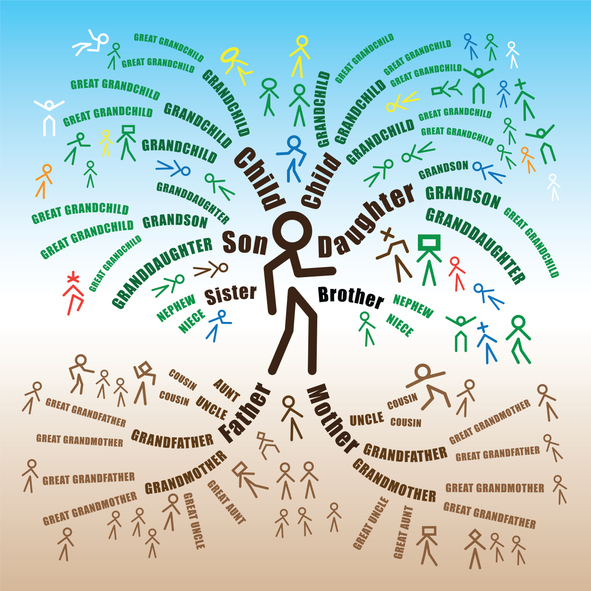
    The idea that we are all connected becomes especially clear when we look at families and communities as living systems rather than just collections of individuals. Within a family, each person’s experiences, beliefs, and emotional patterns ripple outward, subtly shaping the behaviour and wellbeing of others—sometimes across generations. A parent’s unresolved stress can influence a child’s sense of safety; a grandparent’s migration story can shape values around survival, sacrifice, or belonging.

    These dynamics don’t exist in isolation, because families themselves are embedded within larger systems like culture, economy, and community networks. Communities, in turn, reinforce or challenge family patterns through shared norms, support structures, and collective experiences. When these systems are healthy and responsive, they can strengthen individuals by providing connection, identity, and resilience. When they are strained or fractured, they can perpetuate cycles of disadvantage or disconnection. In this way, individuals are both shaped by and contributors to the systems they belong to, constantly influencing and being influenced in an ongoing exchange.

    In this way, individuals are both shaped by and contributors to the systems they belong to, constantly influencing and being influenced in an ongoing exchange—and this interconnectedness extends beyond human systems to include the natural environment, where our wellbeing is intimately tied to the health of the ecosystems we depend on, from the air we breathe to the land and resources that sustain life.

    Family Constellations is a therapeutic approach that explores how hidden family dynamics, loyalties, and unresolved traumas shape our present-day behaviours, emotions, and relationships. Developed by Bert Hellinger, this method works on the premise that individuals are deeply connected to their family system across generations, often unconsciously carrying burdens that do not originate with them.

    In my article “I Will Do It for You, Even If It Costs Me,” I highlight one of the central themes in Family Constellations work: the unconscious loyalty that leads individuals to take on pain, hardship, or limitation on behalf of others in their family system. This phenomenon often manifests as a silent inner contract—an inherited belief that says, “If you suffered, I will suffer too,” or “I will carry this so you don’t have to.” While rooted in love and belonging, these patterns can become deeply limiting.

    The article illustrates how such loyalties may show up in everyday life. A person might struggle financially despite having opportunities, remain stuck in unhealthy relationships, or experience persistent feelings of guilt or anxiety without clear cause. Through the lens of Family Constellations, these struggles are not random; they may be expressions of unresolved family entanglements, where one family member unconsciously “represents” another’s fate.

    A key insight from the article is the idea that love, in these cases, becomes distorted. Instead of supporting growth and vitality, it binds individuals to past suffering. Family Constellations seeks to gently uncover these dynamics, often through experiential exercises where participants represent family members and reveal hidden connections. This process allows individuals to see their situation from a broader systemic perspective.

    Healing in this context does not come from rejecting one’s family, but from acknowledging what belongs to whom. Family Constellations emphasises that true resolution arises when individuals can honour their family members’ experiences without taking them on as their own. By doing so, they restore a natural order within the system—where each person carries their own fate, and love can flow more freely.

    Ultimately, “I Will Do It for You, Even If It Costs Me”sheds light on the powerful, often invisible forces of familial love and loyalty. It reminds us that while these bonds are essential to our sense of belonging, they can also limit us when expressed unconsciously. Family Constellations offers a pathway to transform these inherited patterns, enabling individuals to live more fully in their own lives rather than in service of unresolved pasts.

    SHORT VISUALISATION EXERCISE

    Find a quiet place where you can sit comfortably and bring your attention inward. Gently acknowledge that you are not alone, even in this moment—you are connected to a wider system that stands behind you. In your mind’s eye, imagine your family system: your parents behind you, and behind them their parents, extending back through generations. There is no need to know their stories in detail—simply sense their presence. Notice that life has flowed through each of them to reach you. Take a moment to internally say, “I honour your lives, your struggles, and your gifts. What belongs to you, I leave with you. What has been given in love, I receive with gratitude.”

    Now, expand your awareness to include the communities that have shaped you—friends, teachers, cultures, and places that have supported your growth. Acknowledge their influence and silently thank them for what they have contributed. Allow yourself to feel supported, as if you are standing within a field of connection rather than on your own.

    Finally, bring in the natural world around you. Imagine the ground beneath your feet, steady and holding you, the air filling your lungs, and the wider living environment that sustains your body and energy each day. Sense that you are part of this larger web of life, not separate from it. As you breathe, allow a feeling of alignment to settle in your body—supported from behind, connected around you, and grounded below. From this place, gently return to your day, carrying a quiet sense of strength, belonging, and clarity.

  • Reclaiming Eros

    Reclaiming Eros

    In a culture that favours and celebrates couples, how do we celebrate Valentines Day amongst a generation who are pair bonding less, how do we celebrate passion, romance, aliveness, attraction and fundamentally love?

    In a generation full of such uncertainty we can feed the fear or we can cultivate love and community. Therefore on Valentines Day let’s reclaim eros!

    Eros, in Greek mythology, is the god of desire, erotic love, attraction and the primal force that draws use together either romantically or cosmically. Eros is the longing that drives humans toward beauty, creativity, and even spiritual transcendence.

    Essentially Eros, is the quality of aliveness, vitality, and mystery that keeps us curious. In essence, Eros is the force of attraction itself—the spark that initiates connection, passion, and the creation of new life.

    Esther Perel highlights that eros is not simply about sexual desire or sex but is the dynamic energy that emerges when we can experience both connection and individuality at the same time.

    According to Perel it is:

    • The expression of our life energy. It is what makes us feel vibrant, creative, and turned on by life itself—not just by a partner.
    • Rooted in mystery and separateness. She often explains that while love seeks closeness and security, desire requires distance. Eros thrives in the space between two autonomous individuals.
    • Sustained by novelty and imagination. Predictability and routine can dull erotic energy; curiosity and surprise reignite it.
    • About wanting, not just having. Eros lives in anticipation, longing, and the tension between self and other.

    Reclaiming Eros in Personal Life

    How do we cultivate eros in our lives again?

    To reclaim eros is to reclaim our own sense of vitality. It means becoming a person who is engaged, passionate, curious, and sensually awake to life. To open to life as though it was your lover. To move, breathe and appreciate life in such a way that the mundane comes alive in the most subtle moments.

    I remember years ago I lawn mowed love hearts into the lawn, I painted a love story with my naked body on canvas, scattered rose petals, lit candles, cooked an aphrodisiac dish inspired by Isabel Allende’s book; ‘Aphrodite’…and so much more.

    How you cultivate eros in your daily life is unique, through art, dance, food, meditation, nature-based activities, self-pleasuring, taking yourself out on a date, or celebrating with friends, however it is, it is your way. Here are some ideas for daily practices that may help celebrate eros beyond the bedroom:

    1. Create Micro-Mysteries
    Resist over-sharing every thought and schedule. Allow space for individuality. Take a solo class. Change your routine. Let your partner (or the world) rediscover you.

    2. Cultivate Self-Expansion
    Desire is fuelled by growth. Try something that makes you slightly nervous—a dance class, public speaking, creative writing. When we feel alive in our own skin, we become magnetic.

    3. Practice Sensory Awareness
    Eros lives in the senses. Slow down while drinking your coffee. Notice textures, scents, music. Wear clothes that feel good on your body, not just practical.

    4. Invite Playfulness
    Flirt. Tease. Laugh. Play disrupts routine and invites spontaneity, which is essential for erotic energy. Be curious about others in public.

    5. Protect Time for Beauty
    Art, music, nature—these experiences awaken longing and inspiration. Beauty stirs eros because it reminds us that life is more than function.

    6. Maintain Healthy Distance
    Spend intentional time apart. As Perel suggests, “Fire needs air.” When we step away from constant proximity, we make room for anticipation.

    Eros as Personal Responsibility

    Reclaiming eros is not about demanding more excitement from others. It is about becoming someone who is engaged with life. When we nurture our own passions, creativity, and mystery, we invite desire back into our relationships naturally, starting with the relationship with yourself.

    Eros is less about what we do in private moments and more about how we inhabit our daily lives. It is the courage to remain curious. The willingness to open to life in new ways, celebrate the you are love and you have the freedom to pursue what makes us feel vibrantly alive.

    In a culture that prizes efficiency and productivity, choosing eros is almost radical. It asks us to slow down, to savour, to risk a little uncertainty.

    And perhaps that is the real invitation: not to chase the spark, but to become it!

    Honouring Eros!

    __________________________________________________________________

    Bibliography

    Perel, E. (2006). Mating in captivity: Unlocking erotic intelligence. HarperCollins.

  • Dealing with Change Effectively

    Dealing with Change Effectively

    As we watch the world rapidly changing I have been contemplating a question, one that I have been researching for about 40 years as a therapist. The question is:“How do we optimise the brain and body to deal with constant change and challenges effectively?”
    As a teacher in holistic counselling I draw on many modalities from:

    Yet the one thing that protects us from our nervous systems going into overdrive and overwhelm and discombobulation is relationships, secure functioning relationships. We look after these relationships so they look after us. 
    Secure functioning relationships can be co-created, we do not have to be secure to co-create a secure environment with others, just committed to make it happen, know the ingredients, and the steps and then follow the rules, including repair and fighting fair.
    So what are the ingredients to create secure functioning relationships:

    1. A Shared vision and purpose – Why are you together? What can you do with each other, you can’t with anyone else (For intimate partners)
    2. What are the rules of engagement? (the governing principles) We expect each other to know the rules 
    3. Fighting fair rules as well as how to repair – repairing quickly means things do not go into long term memory
    4. Understand Attachment styles – our attachment styles affect our ability to move toward someone or away with ease or difficulty
    5. Launchings and Landings – here is where rituals take care of the relationship and each other. How do you connect in the mornings and the evenings, what are the little rituals you do together? Putting each other to bed at night? Date nights, coffee with friends? What’s your rituals? Meditate together? Walks and talks? 
    6. Welcome Home Hugs – the moment you arrive seek each other out and give each other a hug, don’t let go until each other is completely relaxed! We are wired to regulate each other! 
    7. Effective Communication – understand how to talk so you are heard as well as the other is heard. Understand the every behaviour has a need trying to be met, so communicating from needs is essential.

    This framework is NOT confined to couples! Parents, friends, family members, co-workers can all create secure functioning relationships, which right now are much needed. 

    Why this works


    Secure functioning relationships create buffers and help us by providing:

    • Co-regulation first preventing threat responses, conflict and prolonged fights,
    • Shared vision means that we value what we have and will protect it from outside forces
    • Rules + repair keep stress out of long-term memory
    • Needs-based language reduces defensiveness
    • Rituals create predictability in a changing world


    Exercise to Try At Home

    1. Welcome Home Hug – If in doubt hug it out – but hold onto each other until both are relaxed
    2. Spot the different attachment styles of your friends, partner, co-workers and family members and respond accordingly – if someone is avoidant-anxious – try giving them an escape route if you are wanting to connect by saying:
      • I know you are busy, but when you are ready I would love to…….(fill in the gap)” Or “I don’t want to stop you from what you are doing, when you are ready, could we….(fill in the gap)”. Avoidants get swamped easily, so we need to give them an escape route so they can come to us.
      • With an ambivalent- anxious, they are external regulators so go towards them with loving words when they criticise on returning from being away. For example: “I am not going anywhere today, and I would really like to hang out with you.” “When I come home let’s sit down and have dinner together” or “I really enjoy hanging out with you, as our friendship means a lot to me.”
    3. Be aware of the towards and away dynamics as conflicts arise when we move away from each other, in the case of ambivalent anxious, they need reassurance that you will return, and avoidants who need to know that you will not swamp them, and there is an escape route when coming towards them! Practice allowing space (if ambivalent-anxious) or go towards the others more often, if avoidant.
    4. How can you offer safety in all your interactions? What is possible when we truly feel safe?

    Here’s to creating a more secure functioning world, one couple, one friend, one family member, at a time!