
Category: News

  • The Neuroscience of Enquiry: How 4 Questions Can Rewire Your Brain

    The Neuroscience of Enquiry: How 4 Questions Can Rewire Your Brain

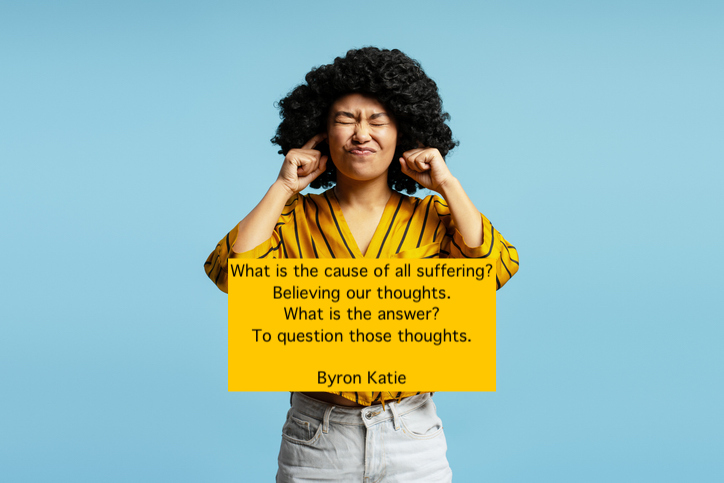
    Have you ever caught yourself spiralling into stress over a single thought? Maybe it’s “I’m not good enough,” or “They don’t respect me.” That one belief, left unchecked, can shape your emotions, your reactions, your body and even your relationships.


    A single unchecked thought can hijack your entire nervous system! One moment, you’re fine, and the next, you’re spiralling—heart pounding, stomach in knots, mind racing through every worst-case scenario like it’s training for the apocalypse.


    But what if questioning your thoughts could actually change your brain?
    This is where The Work of Byron Katie comes in—a deceptively simple practice that has profound effects on how we think, feel, and respond to life. And science backs it up. From neuroplasticity to emotional regulation, The Work of Byron Katie provides a profound mechanism that can reshape the brain.

    How Stressful Thoughts Get Stuck in the Brain


    Think of your brain like a well-worn hiking trail. Every time you believe a stressful thought, your brain strengthens that pathway and it gets more entrenched. It works like this:
    Negative Thought:“They don’t respect me.”
    Emotional Reaction: Anger, sadness, or withdrawal.
    Brain’s Response: The amygdala (your brain’s threat detector) lights up, reinforcing the belief.
    Cycle Continues: Over time, this thought becomes transparent and automatic.
    Your brain is designed to be efficient—it wants to protect you, so it strengthens beliefs that seem to “keep you safe.” The problem? Many of these thoughts aren’t true. They’re just interpretations of a reality.

    The Work as a Brain-Rewiring Tool


    Byron Katie’s four questionsand turnarounds might seem too simple to be life-changing, but let’s look at what they actually do to your brain:


    1️. Is it true? Interrupts automatic thinking. Forces your prefrontal cortex (the logical part of your brain) to pause instead of reacting.


    2️. Can you absolutely know that it’s true? Creates cognitive flexibility. The brain starts loosening its grip on rigid beliefs, making space for alternative perspectives.
    The first two questions force your prefrontal cortex (the rational part of the brain) to slow down and reconsider automatic assumptions. Our executive functioning, those ambassadors come back online. 


    3️. How do you react when you believe that thought? Activates self-awareness. Your body’s stress response becomes visible—this is where real change begins. The third question builds metacognition, making you more aware of how your thoughts shape your emotional state.


    4️. Who would you be without that thought? Stimulates neuroplasticity. Your brain starts rewiring new pathways, shifting toward calm, clarity, and curiosity.
    And then comes the turnarounds—a plot twist for your mind. Instead of clinging to one rigid perspective, or that well worn hiking trail, you flip it:


    “They don’t respect me” → “I don’t respect them” → “I don’t respect myself.”


    Wait, what? Now, instead of being trapped in blame, you have an opening. A chance to see the situation differently, to experience it differently in the body, have choices again as you begin to find where that is true in your life. 
    Over time, practising The Work weakens old, stress-inducing feedback loops and strengthens new ones based on curiosity, openness, and clarity.

    Meet Sarah: The Thought That Changed Everything


    Imagine Sarah, a university student caught in a relentless loop of self-doubt. Every time she sits down to study, a familiar thought creeps in: “I’ll never be successful.” The more she believes it, the heavier it feels—anxiety sets in, motivation fades, and the cycle tightens its grip.
    One day, she comes across The Work of Byron Katie and, almost sceptically, asks herself the first question: “Is it true?” For the first time, she pauses. Can she absolutely know that it’s true? The certainty begins to crack. As she moves through the four questions, something shifts. The thought that once felt like an absolute truth now feels… optional.
    Her turnaround? “I am successful.” (In truth, there are already ways in which Sarah is successful and is a success and her brain starts to spark (those synapses start rewiring) as she remembers many. Success is not a fixed outcome but an ongoing process).
    OR
    “ I am a success”. (In truth, success isn’t only measured by external achievements. Sarah has grown, learned, and accomplished things in many ways that matter).
    This is not a forced affirmation, but a quiet recognition of truth and endless possibilities.

    Weeks pass, and Sarah notices something strange. The old thought still visits, but it no longer controls her. Anxiety loosens its grip. Motivation returns. Her brain—once locked in self-criticism—is learning a new way forward, not through blind positivity, but through the simple act of questioning the stressful thoughts to see if they are valid or true or not!

    The Science of Inner Freedom


    The beauty of The Work of Byron Katie isn’t just in the relief it brings—it’s in how it rewires the brain for lasting change.
    Reduces emotional reactivity: By calming the amygdala.
    Strengthens cognitive flexibility: By activating the prefrontal cortex and executive functioning.
    Promotes resilience: By fostering new, empowering thought patterns.
    As we dive into the neuroscience of The Work, one fundamental truth emerges: thoughts, in themselves, are neutral. It’s our unquestioned belief in them that causes suffering. When we believe a stressful thought, our brain reacts as if it’s reality—triggering the amygdala, fuelling stress hormones, and reinforcing well-worn neural pathways.

    But as Byron Katie reminds us:
    “A thought is just a thought. It’s not personal until you believe it.”


    This is where The Work becomes so powerful. By questioning our thoughts, we loosen their grip, interrupt the brain’s automatic stress responses, and create space for clarity. Instead of being held hostage by our thinking, we step into the role of observer—curious, open, and free.
    The next time a thought tightens its grip, turn toward it with curiosity. Let these four questions be lanterns in the fog, unravelling the illusions that bind you, rewiring your mind, and leading you back to the freedom that was always yours.

    ~ Written by Ami Besson (Integrative Therapist at The Awakening Group)

  • Bring Back the Spark Challenge

    Bring Back the Spark Challenge

    Every Behaviour is Trying to Get a Need Met

    You may know that I counsel couples, having trained with Dr Stan Tatkin, Dr Tammy Nelson, Dr Emily Nagoski, and been one of the top tantra teachers in the 90s. I’m a romantic, but over the years I have seen that love is a skill, not just a verb!


    Esther Perel talks about the 7 Verbs That Shape the Way You Love that include: To Ask, To Take, To Receive, To Give, To Share, to Refuse, To Play and Imagine. Some verbs we are stronger in as we have had the modelling growing up and some we need to practice more, for some people, this is to ask, or to refuse!
    In relationships we often ask of our partners to be someone they have no idea how to be, they haven’t developed the skills through modelling, we even fight for it thinking this will change it, rather than see it as lacking the internal software that needs support in developing. We have this hidden concept of normal that we expect the other to meet, without ever discussing. ie ‘My expectations in this relationship are….(Add yours here).’ ‘What I would like to be guaranteed in this relationship is…..(Add yours here)’. ‘What I can guarantee in this relationship is …(add yours here)’.
    Inherent in our protest behaviour or the push and pull, are fundamental needs that are trying to be met. Often in relationships the fundamental needs driving behaviour are:

    • Do I matter to you? (Matter)
    • Am I safe? (Safety)
    • Are we connected? (Connection)

    Words are not enough!
    Graduating from Maslow’s Hierarchy of needs, Max Neef developed a more comprehensive list of fundamental needs.  Inherent in every behaviour is a need trying to get met yet we have not taken the time to identify the need that is eliciting the behaviour.
    So here are a few pointers:

    • Identify a behaviour that you keep doing, or a reaction that you have.
    • Is there a solution you are asking the other to give you? or fighting for?
    • Ask yourself, ‘If I had this solution, what would it then give me?’
    • Use the Needs sheet  to identify the need that is trying to be met
    • Then ask yourself, ‘How could I begin to give myself this need?’
    • Then ask yourself, ‘How can I ask another to support me with this need?’ Remember there are only conflict of solutions, there are never conflict of needs.
    • Putting it into a sentence whilst staying close to your own needs means owning the problem. The sentence could look something like this,

    “I miss connecting (need) with you and I find myself getting overwhelm when I don’t feel connected. Would you be willing to make some time to do something together throughout this week, so that I feel closer to you?”

    • Pop the need in the middle of the relationship for both to take care of rather than expecting one person to satisfy all your needs. Shift from pro-self and just getting your need me at the expense of the other, to pro-team (the WE gig) where both parties get their needs met. This not only strengthens the relationship, self esteem of each other, but also meets the needs for fairness, mutuality, sensitivity and justice. 

    I propose a 30 day challenge, supported with a few tips and that is to ‘Bring the Spark Back Challenge‘. Over the next month find ways to bring the spark back in your relationship such as:

    • listen for needs; your own and your partner’s,
    • to find ways to connect, intimately or otherwise
    • to support novel experiences (creates new connections and long term memory)
    • rediscover what you do well together
    • make time to find what you can both do better in the relationship
    • play and imagine – what are you favourite games?
    • discover how to make each other laugh, then rinse and repeat
    • discover how to bring out the best in each other, so you get the best from your partner!

    As a community this is an opportunity to share your experiences your insights, what works for you and what doesn’t. We would love to hear from you

    Bring Back the Spark Challenge starts today!

  • Ten Keys to Thriving

    Ten Keys to Thriving

    When life throws you lemons here are keys to thriving rather than just coping!

    Over the last 35 years I have been experimenting with how to regulate the nervous system, change the brain, and to rest in who we really are. Here is my top 10 practices:

    1. At the beginning of the day, before you jump out of bed, Create your Day: that is consciously create the day that you want to live. Combine thoughts with feelings to create. Don’t vision up something you can’t want to live. If your brain says ‘No’ to something you really want bring Compassion to that part and say “I am so sorry that it feels undeserving, not good enough” etc until it comes back to peace and stillness. Then Create your day again. Start small if you like then as you gain more confidence add bigger hearts desires. Start with “Today I will experience….”
    1. Before you wire your brain to a device, wire your brain to the truth of who you are, nature and meditate first thing in the morning, ideal on the earth outside as the morning sun is rising. Yogic or active meditations are more apt for the western mind and body as they burn up cellular memory whilst aligning you with true consciousness and peace. Develop a spiritual practice that supports the realisation of who you really beyond the neurosis of the mind. A powerful place to start the day from.
    1. Exercise, Diet and Sleep – our bodies crave exercise, oxygenating the body and brain in the morning means, for instance the hippocampus enlarges creating more ease in making all those decisions throughout the day. Find an exercise practise that energises your body and brings your mind to quiet. Ensure that you take care of your sleep and find the diet that most suits your body, it maybe the opposite of what you are doing right now!
    1. Sunshine; Go Outside at least once a day and sit in the sun – we are light and vitamin D deprived resulting in low immune system, digestive issues, exhaustion and depression etc. D Minder App helps monitor your sun exposure to ensure you are getting enough vitamin D. 
    1. Gratitude is the Attitude Throughout the day keep a journal and not only writing in it but drawing in it so the right hemisphere of the brain is engaged. This changes the way you see the world and helps prevents the consequences of complaining and the negative bias in the brain.
    1. Take care of your relationships so they take care of you. Healthy relationships are the biggest predictor to longevity. Create daily connection rituals with your partner or friends daily. We are social creatures and from a psychobiological approach we are wired to each other. Not only does this prevent the effects of loneliness but also wires your brain for secure functioning, knowing that someone else has your back, you are a team and you are supported out in the world. Furthermore it regulates your nervous system. This is social medicine! Connection Rituals, 10 Keys to Couples Communication.
    1. Question stressful thoughts with The Work of Byron Katie so they let go of you, therefore the way you see the world changes, reduces stress, creates ease and peace. Without the stressful thoughts conflict is reduced, you come into resonance with a whole other reality you couldn’t see before and how life truly does support you. How Beliefs Work
    1. Develop Healthy Habits that change your brain, body and energy bringing about a work life balance. Dan Seigel created the Healthy Mind Platter outlining the optimum balance for healthy brain function. Find habits that allow you to rest, be active, create down time as well as social time, and focus time. Too much of one means our body brain will at some point ask us to stop!
    1. Know how to deal with feelings so they do not rule you. Direct Experience, Emotional Freedom Technique, Compassionate Key work, Internal Family Systems Therapy, find what works for you. Feelings are energy, therefore if you resist them they get locked in your body, if you surrender to them they transmute and alchemise into consciousness and peace. Resistance is the only cause of emotional pain! All the Feels Series on Spotify to support you along the way! Become a master of your own internal emotional ecology. 
    1. Viktor Frankl once said “Those who have a ‘why’ to live, can bear with almost any ‘how’.” “Don’t aim at success. The more you aim at it and make it a target, the more you are going to miss it. For success, like happiness, cannot be pursued; it must ensue, and it only does so as the unintended side effect of one’s personal dedication to a cause greater than oneself or as the by-product of one’s surrender to a person other than oneself. Happiness must happen, and the same holds for success: you have to let it happen by not caring about it. I want you to listen to what your conscience commands you to do and go on to carry it out to the best of your knowledge. Then you will live to see that in the long-run—in the long-run, I say!—success will follow you precisely because you had forgotten to think about it” – Brave the Wilderness, listen to that inner voice and live it!